

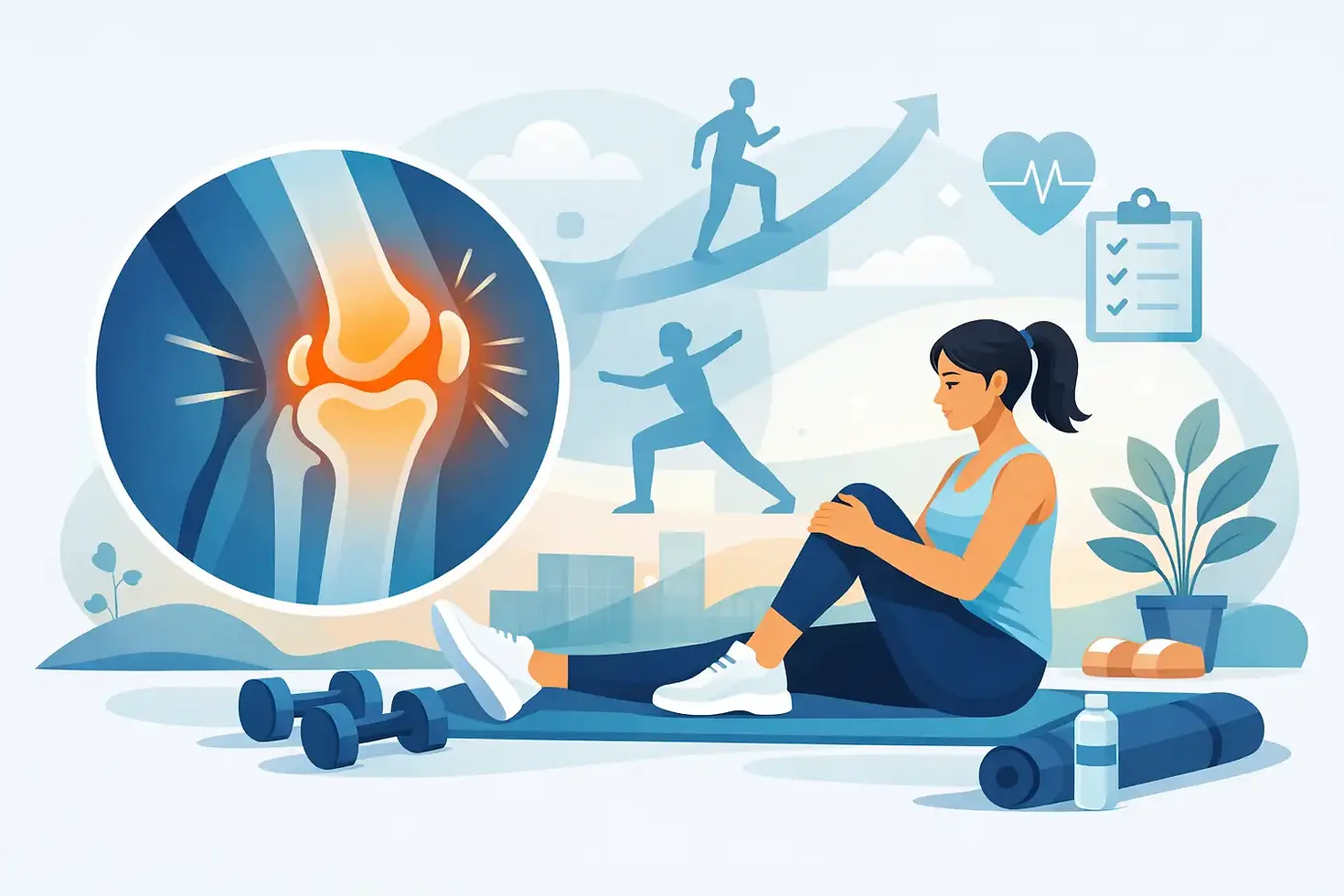
Training for Osteoarthritis Relief That Works

A painful knee when standing from a chair, stiff fingers in the morning, or hips that ache after a short walk can make exercise feel like the last thing you should do. Yet properly planned training for osteoarthritis relief is often one of the most effective ways to reduce pain, improve confidence, and preserve the ability to move independently.
The key word is properly. Osteoarthritis is not a condition to ignore and push through with random workouts. Nor is it a reason to stop moving altogether. For adults over 40, especially those managing knee, hip, spine, hand, or shoulder osteoarthritis, the right exercise dose can strengthen the structures around a joint without repeatedly provoking it.
Why Osteoarthritis Often Gets Worse When You Move Less
Osteoarthritis involves changes to joint cartilage and surrounding tissues, but pain is not determined by an X-ray alone. Two people can have similar imaging results and very different levels of discomfort and function. Muscle strength, joint stability, body weight, sleep, stress, previous injuries, movement habits, and confidence all affect the experience of pain.
When a joint hurts, avoiding activity is an understandable response. The problem is that prolonged inactivity weakens the muscles that help absorb force. A weaker thigh can leave the knee less supported during stairs and walking. Weak hip muscles can alter how the pelvis and knee control movement. Reduced balance can make a person more cautious, which gradually leads to even less activity.
The aim is not to "wear out" the joint with exercise. It is to build capacity. A well-designed program improves the strength, mobility, coordination, and endurance needed for real life: getting up from the floor, carrying groceries, climbing steps, traveling, and staying active with family.
What Effective Training for Osteoarthritis Relief Includes
A sound program begins with an assessment, not a generic exercise sheet. The coach needs to understand which joints are involved, when symptoms occur, what movements feel threatening, relevant medical conditions, medications, prior surgeries, and the demands of daily life.
For someone with knee osteoarthritis, for example, training may focus heavily on quadriceps, hamstring, calf, and hip strength. For hip osteoarthritis, hip muscle control, trunk strength, walking tolerance, and range of motion may need greater attention. The exercises can look similar on paper, but the loading, range, support, and progression should not be identical.
Strength Training Is the Foundation
Strong muscles reduce the burden placed directly on a painful joint and improve control during movement. This does not require extreme lifting or punishing workouts. It requires progressive resistance that is appropriate for the individual.
A beginner may start with supported sit-to-stands, wall or countertop push-ups, light rows, low step-ups, and resistance-band exercises. A more experienced adult may progress to controlled squats to a comfortable depth, leg presses, split-stance exercises, loaded carries, and machine-based strength work.
The right load is challenging enough to create adaptation but not so aggressive that it produces a prolonged flare. Mild discomfort during training can sometimes be acceptable, particularly when a joint is stiff. Sharp pain, limping that worsens, swelling, loss of motion, or symptoms that remain substantially worse the following day are signs that the session needs adjustment.
Mobility Has a Role, but Stretching Is Not the Whole Plan
Stiff joints often benefit from gentle, regular movement. Controlled range-of-motion work can make it easier to walk, stand, reach, or get dressed. However, stretching alone rarely provides the long-term support that an arthritic joint needs.
Mobility work is most useful when paired with strength and control. If a knee does not fully straighten comfortably, the program may include gentle extension work, calf mobility, and strengthening in the available range. If a hip feels restricted, the answer is not always to force a deeper stretch. Sometimes better hip and trunk control allows the person to access movement with less irritation.
Low-Impact Conditioning Builds Daily Stamina
Walking, cycling, swimming, water exercise, and elliptical training can improve cardiovascular fitness without the repeated impact of running. The best choice depends on the joint involved and the person's tolerance. Some people with knee arthritis feel excellent on a stationary bike but dislike long walks. Others find water exercise comfortable but need land-based strength training to improve stair climbing and bone health.
Consistency matters more than choosing the supposedly perfect modality. Start below the point that triggers a significant flare, then build duration or intensity gradually. For a previously sedentary person, even several short sessions across the week can be meaningful progress.
The Pain Rule: How to Train Without Guesswork
There is no universal pain number that applies to every person, but there should be a clear monitoring system. During exercise, discomfort should remain manageable and should not cause a major change in technique. Afterward, symptoms should settle back toward the person's normal level within a reasonable period, often by the next day.
A useful question is: can you perform the movement with control, and how does the joint respond later? If pain rises sharply, swelling appears, sleep is disrupted, or the joint remains substantially more painful for more than 24 hours, reduce the load, range, volume, or frequency next time.
This is where expert guidance matters. Many adults either stop too soon at the first sensation of discomfort or push far beyond their current capacity because they were told that pain is weakness. Neither approach is reliable. Exercise selection and dosage should respond to the body, not to gym culture.
Common Mistakes That Delay Relief
The first mistake is relying on rest as the only solution. Rest may be necessary during an acute flare, but it is not a long-term plan for maintaining muscle, balance, and mobility.
The second is using a one-size-fits-all workout. High-volume squats, deep lunges, jumping drills, or fast group classes may be appropriate for some people, but they are not automatically appropriate for an adult with painful knees, poor balance, excess weight, or a history of joint surgery.
The third is chasing mobility while neglecting strength. A joint that moves more freely but lacks muscular support may still struggle with the demands of daily life.
Finally, people often progress too quickly after a good week. Osteoarthritis symptoms can fluctuate. Feeling better is a reason to progress carefully, not to double the workload overnight.
When You Need Medical Clearance or Specialist Input
Exercise is widely beneficial for osteoarthritis, but certain symptoms require medical evaluation before continuing a training plan. Seek prompt assessment for a hot, red, markedly swollen joint; sudden inability to bear weight; a fever; unexplained severe pain; a recent major injury; or new numbness and weakness.
If you have had a joint replacement, significant osteoporosis, uncontrolled blood pressure, heart disease, diabetes complications, inflammatory arthritis, or are preparing for surgery, exercise should be coordinated with your physician and rehabilitation team. A medical-informed trainer can work within those boundaries, but diagnosis and medical treatment remain the role of qualified healthcare professionals.
A Better Standard for Long-Term Joint Health
Osteoarthritis relief is rarely about finding one miracle exercise. It comes from a structured plan that makes your joints more capable over time: stronger legs, better balance, more efficient movement, improved fitness, and a realistic understanding of what your body can tolerate today.
At Fitness Tutor, this is the standard behind medically informed coaching for adults who want more than generic gym advice. Your program should account for your symptoms and history while still moving you forward with measurable progress.
A painful joint may change how you train, but it does not have to decide how much of life you can continue to enjoy. Start at the level your body can manage, train with discipline, and allow steady progress to rebuild trust in movement.
Comments