

Is Exercise Safe with Osteoporosis?

A diagnosis of osteoporosis often creates a damaging cycle. People become afraid to move, so they move less. Then strength declines, balance worsens, and the very risk they are trying to avoid - falls and fractures - starts to rise.
So, is exercise safe with osteoporosis? In most cases, yes. More than safe, it is often necessary. The key is that exercise must be selected and progressed with care. Osteoporosis does not mean avoiding movement. It means avoiding the wrong kind of movement, poor loading strategies, and unsupervised programs that ignore bone fragility, posture, balance, and medical history.
For adults over 40, and especially for older adults already noticing reduced strength, stiffness, or loss of confidence, this distinction matters. The goal is not to train like a twenty-year-old in a commercial gym. The goal is to build a body that is stronger, steadier, and more resilient in everyday life.
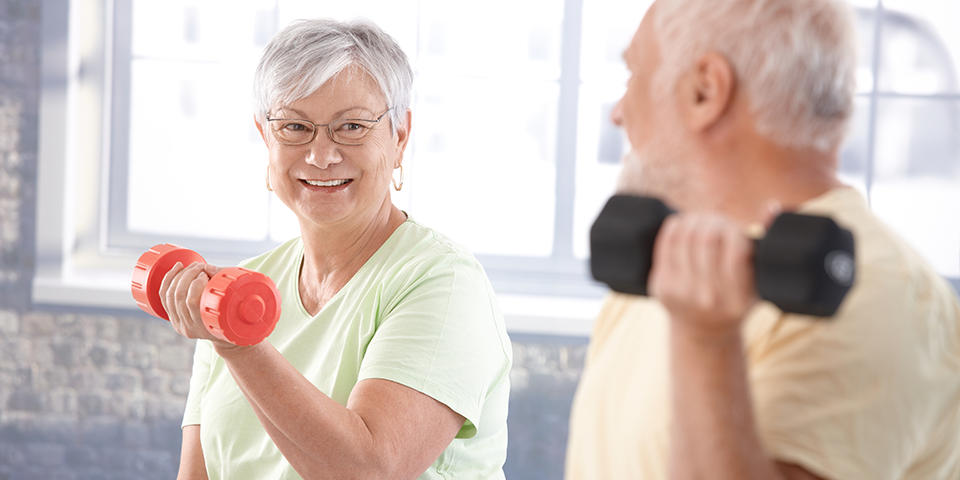
Is exercise safe with osteoporosis for most people?
For most individuals with osteoporosis or osteopenia, appropriately prescribed exercise is considered beneficial and recommended. Bone is living tissue. It responds to load, muscle pull, and regular physical demand. Just as importantly, exercise improves the supporting systems around the skeleton - muscle strength, coordination, posture, gait, reaction time, and balance.
That matters because fractures do not happen only because bones are weaker. They also happen because people trip, lose balance, move poorly under load, or no longer have the strength to catch themselves. A well-designed exercise program addresses both sides of the problem.
However, safe does not mean casual. Someone with low bone density should not copy random online workouts, aggressive yoga classes, high-impact boot camps, or heavily loaded spinal exercises without screening. The right program depends on bone density results, fracture history, pain, posture, medications, age, training history, and overall health.
Why exercise matters more after a bone loss diagnosis
One of the biggest mistakes after an osteoporosis diagnosis is treating the condition as if rest is protective. Prolonged inactivity reduces muscle mass, lowers bone-loading stimulus, and accelerates deconditioning. It can also increase fear of movement, which tends to make daily life more hazardous rather than less.
Exercise helps in several ways. Resistance training supports muscular strength, which improves how the body absorbs force. Weight-bearing activity gives bone a reason to maintain itself. Balance training reduces fall risk. Mobility work can improve movement quality, although it must be chosen carefully when spinal fragility is present. Even simple improvements in leg strength and posture can make stairs, carry groceries, and getting up from a chair much safer.
This is especially relevant for older adults who want to maintain independence. The objective is not merely stronger bones on a scan. It is preserving the ability to move confidently through daily life.
Which types of exercise are usually safe and helpful
The safest and most effective exercise plan for osteoporosis usually combines several categories rather than relying on one. Resistance training is often central. Properly coached strength work for the legs, hips, upper back, and trunk can improve bone-loading tolerance, posture, and functional capacity. Machines, cables, dumbbells, and bodyweight work may all be useful, depending on the person.
Weight-bearing aerobic exercise can also help. Walking is commonly recommended because it is accessible and low risk for many people, though on its own it may not be enough to build meaningful strength. Step training carefully selected low-impact cardio, or brisk walking can be appropriate if pain, balance, and joint health allow.
Balance training deserves special attention. Many fractures occur after falls, not during exercise itself. Exercises that improve single-leg stability, foot control, gait, and lower-body coordination can be just as important as lifting weights. For some clients, this begins with very basic drills and gradually progresses as confidence returns.
Postural strengthening is another priority, particularly for those with thoracic rounding or previous vertebral compression fractures. Strengthening the upper back, hips, and trunk can help reduce the flexed posture that places more stress on vulnerable spinal structures.
What exercises may be risky with osteoporosis
The movements most often questioned are those that place excessive stress on the spine, especially under flexion, twisting, or sudden impact. Deep loaded spinal rounding, aggressive sit-ups, forceful toe-touching, twisting under load, and poorly controlled high-impact jumping may increase fracture risk in some individuals.
This is where generic advice becomes dangerous. A class instructor or online program might call a movement good for the core, but that does not mean it is appropriate for someone with vertebral osteoporosis. The issue is not that exercise is harmful. The issue is that certain mechanics are not suitable for certain bones.
Heavy lifting is not automatically forbidden, either. That is another common misunderstanding. Load can be therapeutic when it is introduced gradually, with sound technique and the right exercise selection. What is unsafe is jumping into loads or movement patterns the body is not prepared to handle.
How to make exercise safe with osteoporosis
Safety starts with assessment. Before any program is designed, there should be a clear picture of medical background, previous fractures, current pain, posture, balance, and movement quality. Bone density results are useful, but they are not the only factor. Two people with the same scan can have very different exercise tolerance.
From there, good programming follows a few principles. First, start below the person’s maximum capacity, not at it. Second, build consistency before complexity. Third, prioritize technique and control over intensity for its own sake. Fourth, train the whole person, not just the diagnosis.
A safe session may include lower-body strength work, supported balance drills, upper-back strengthening, and carefully selected walking or conditioning work. What it should not include is guesswork.
This is one reason medically informed coaching matters so much for adults over 40 and beyond. A trainer who understands aging, bone health, posture, pain, and common chronic conditions can modify intelligently instead of simply telling someone to avoid everything.
Common situations where the answer is “it depends”
If someone has severe osteoporosis, recent fractures, significant back pain, marked kyphosis, or poor balance, exercise may still be appropriate, but the starting point must be more conservative. The same applies to people with arthritis, joint replacements, diabetes-related neuropathy, or cardiovascular limitations. In these cases, the question is not whether movement is valuable. It is how the program should be structured.
For example, walking may be excellent for one person and inadequate for another. Free weights may be empowering for one client and unnecessarily unstable for another. Floor exercises may suit someone with good mobility but be awkward and risky for someone who struggles to get down and up safely.
This is why broad internet advice often falls short. Adults with osteoporosis need individual judgment, not one-size-fits-all rules.
Warning signs that a program is not appropriate
Exercise should challenge the body, but it should not create fear, sharp pain, or a sense that joints and spine are being forced into positions they cannot control. Repeated pain spikes, worsening posture, dizziness, loss of balance during sessions, or techniques that rely on momentum are all signs that the program needs adjustment.
Another warning sign is a coach who speaks only in extremes - either “never lift anything” or “just train hard and stop worrying.” Neither approach reflects the nuance of osteoporosis management. The right path is structured progression with informed caution.
The confidence factor most people overlook
Physical safety is only part of the equation. Confidence matters. Many adults with osteoporosis have already begun limiting themselves - avoiding stairs without railings, skipping travel, hesitating to carry bags, or refusing exercises they assume are dangerous. That loss of confidence can shrink life quickly.
A good exercise program restores trust in the body. When someone learns how to hinge safely, rise from a chair with power, walk with better balance, and carry weight with control, fear starts to decrease. That psychological shift is not minor. It is often the difference between dependency and independence.
This is the standard older adults should expect from professional coaching. Not entertainment. Not punishing workouts. Not recycled routines built for younger populations. They need clear progression, close attention to technique, and a plan designed for long-term function.
At Fitness Tutor, this protective, science-based approach is exactly why structured coaching can be so valuable for adults managing bone loss and other age-related concerns.
If you have osteoporosis, the safest decision is usually not to stop exercising. It is to stop guessing and start training in a way that respects both your risks and your potential.
Visit www.fitness-tutor.com to learn more and start your journey toward a stronger, healthier future. You can also reach out directly to Coach Paul Kuck for more information or to book a consultation.
Contact Coach Paul Kuck
Phone: 97513400
Email: paul@fitness-tutor.com
Website: www.fitness-tutor.com
Comments