

Bone Density Progress That Actually Builds Bone

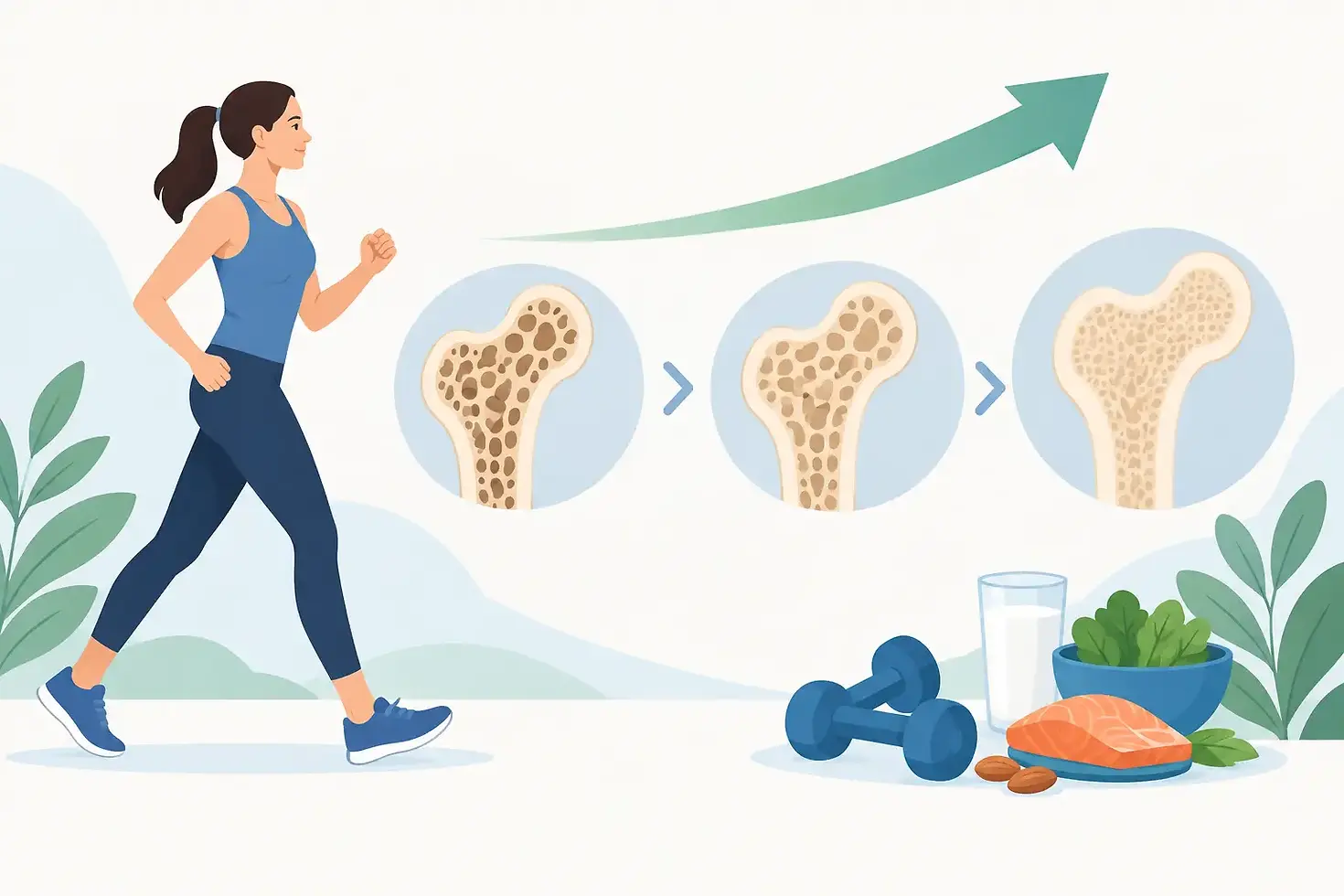
A scan result can feel deeply personal when you are over 40. You may see a T-score that has slipped, hear the word osteopenia, or worry after a parent has had a hip fracture. But bone density progress is not measured by good intentions, light exercise, or a week of healthier meals. It is a slow biological adaptation that needs the right mechanical stimulus, adequate recovery, sound nutrition, and medical oversight when risk is high.
For adults in midlife and beyond, the goal is bigger than improving a number on a report. Better bone health supports the confidence to carry groceries, climb stairs, travel, recover from a stumble, and remain independent. The correct plan must also respect arthritis, old injuries, joint replacements, medications, and current fracture risk.
What Bone Density Progress Really Means
Bone is living tissue. It responds to the forces placed upon it, but it does so gradually. Cells that build bone and cells that break down bone are always at work. With aging, menopause, low activity, under-fueling, certain medical conditions, and some medications, breakdown can begin to outpace rebuilding.
Progress can mean one of three things: gaining bone mineral density, maintaining density when loss would otherwise occur, or reducing fracture risk through stronger muscles, better balance, and safer movement. All three are valuable. A person with stable bone density and substantially better leg strength may be far less likely to fall than they were a year earlier.
This is why a bone scan is necessary but incomplete. Dual-energy X-ray absorptiometry, usually called a DXA scan, measures bone mineral density at selected sites such as the hip and spine. It does not directly measure your balance, reaction time, posture, gait, grip strength, or ability to get up from the floor. Those qualities matter greatly in real life.
Why Walking Alone Is Usually Not Enough
Walking is excellent for cardiovascular health, mood, circulation, and maintaining daily function. It is also weight-bearing, which is better for bone than sitting. Yet for many adults, a regular walk does not provide enough progressive loading to meaningfully improve bone density at the hip or spine.
Bone responds best to forces that are novel, sufficiently challenging, and progressively increased within safe limits. The body adapts when it has a reason to adapt. If your walks are always at the same pace, on the same flat route, your body becomes efficient at that task. That is useful conditioning, but it may not be a strong bone-building signal.
Higher-impact activities such as jogging, hopping, and jumping can be effective for some people. They are not automatically appropriate for someone with osteoporosis, a previous vertebral fracture, severe knee pain, poor balance, or a long history of inactivity. This is where generic advice becomes risky. The right dose depends on your scan results, symptoms, health history, and movement capacity.
Strength Training Is the Foundation
Progressive resistance training is one of the most practical tools for protecting bone while also improving muscle, balance, and daily function. When muscles pull against bone during loaded movements, they create the mechanical demand that encourages adaptation.
For most adults, a well-designed program centers on movements that strengthen the legs, hips, back, chest, and upper body. Depending on the individual, this may include squats to a box, sit-to-stands, step-ups, hip hinges, rows, presses, carries, and carefully selected machine exercises. Free weights are not mandatory. Machines, cables, resistance bands, and body weight can all have a place when the exercise is challenging enough and performed with good control.
The word progressive matters. Using very light weights forever may maintain familiarity with exercise, but it rarely drives meaningful change. A qualified coach gradually adjusts resistance, repetitions, range of motion, tempo, and exercise selection as your capacity improves. The goal is not to train recklessly or chase exhaustion. It is to build strength with clear technique and enough load to produce adaptation.
For someone with low bone density in the spine, exercise selection and form deserve particular attention. Repeated loaded spinal flexion, forceful twisting, and uncontrolled floor exercises may not be appropriate. A medical-informed training plan teaches you how to brace, hinge from the hips, get up and down safely, and load the body without adding unnecessary risk.
Impact Training Requires Screening
If your clinician has cleared you for impact, controlled drills such as brisk stair climbing, heel drops, low hops, or step-based impacts may be introduced gradually. The dose can be surprisingly modest. More is not always better, especially when joints, tendons, or balance are limiting factors.
If impact is not suitable, strength training still has substantial value. It can improve the muscle and functional capacity that help prevent the falls that cause many fractures. This is not a lesser plan. It is the appropriate plan for your present risk profile.
Nutrition Supports the Training Signal
Exercise gives bone a reason to adapt. Nutrition supplies the materials and energy needed to do the work.
Protein is frequently overlooked in adults who are trying to lose weight or who eat lightly due to low appetite. Insufficient protein can make it harder to maintain muscle, and muscle loss is bad news for strength, balance, and bone-loading capacity. Your ideal intake depends on body size, kidney health, overall diet, and medical guidance, but protein should be deliberately included across the day rather than treated as an afterthought.
Calcium and vitamin D matter, but supplements are not a substitute for training or medical care. Food sources, sun exposure habits, blood work, medication use, and dietary restrictions all affect the right approach. Taking large doses without guidance is not automatically safer and can create problems for some people.
Adequate total calories also matter. Chronic aggressive dieting can compromise recovery and contribute to loss of muscle and bone. If fat loss is a goal, the better approach is usually a measured calorie deficit paired with resistance training and sufficient protein, not repeated crash diets.
Track Bone Density Progress the Right Way
DXA results should be interpreted in context. Small changes between scans are not always true biological changes. Every testing center has a margin of measurement error, often described as least significant change. A clinician can help determine whether the shift in your result is meaningful.
Whenever possible, use the same facility and machine for follow-up testing. Comparing results from different equipment can make trends harder to interpret. Repeating a scan too soon may also create confusion because bone changes slowly. For many people, follow-up intervals of roughly one to two years are more useful than frequent testing, though your physician may recommend a different schedule based on treatment and risk.
Keep a parallel record of performance markers. Can you rise from a chair without using your hands? Are your step-ups stronger? Has your grip improved? Can you carry shopping bags with better posture? Have you had any falls, near-falls, or new pain? These changes reveal whether your program is improving the practical protection around your skeleton.
When Medical Follow-Up Cannot Wait
Low bone density is not solely a fitness issue. Speak with your physician promptly if you have had a fracture from a minor fall, lost noticeable height, developed sudden mid-back pain, entered menopause early, use long-term steroid medication, or have a family history of hip fracture. Conditions involving thyroid function, digestive absorption, hormones, kidney health, and inflammatory disease can also affect bone.
Medication may be recommended for some people with osteoporosis or high fracture risk. Exercise remains valuable in that situation, but it should complement medical treatment rather than compete with it. The strongest plan is coordinated: physician, appropriate testing, nutrition, and progressive training working toward the same outcome.
Do not judge your bone health by whether you look fit or feel generally active. Build the strength to challenge your skeleton safely, track meaningful measures over time, and let your current risk determine the plan. The next strong step is not necessarily the hardest exercise. It is the one you can perform consistently, confidently, and progressively for years.
Comments